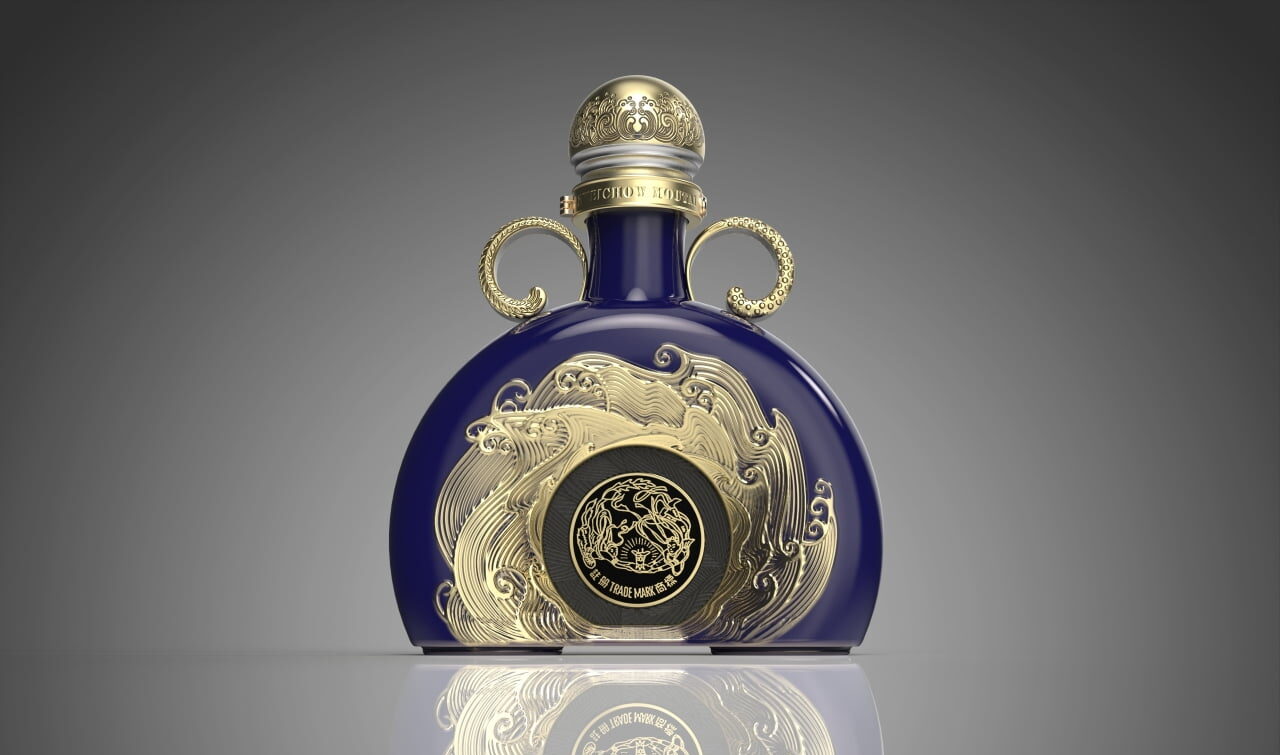
Your premium spirit gets lost on a crowded shelf, stuck in a generic glass bottle. This disconnect cheapens your brand story and fails to justify its price.
Premium spirits choose ceramic bottles for their unique ability to convey craftsmanship, weight, and exclusivity. Unlike glass, ceramic offers sculptural shapes, rich textures, and complete opacity, turning the bottle itself into a key part of the brand story and justifying a higher price point.
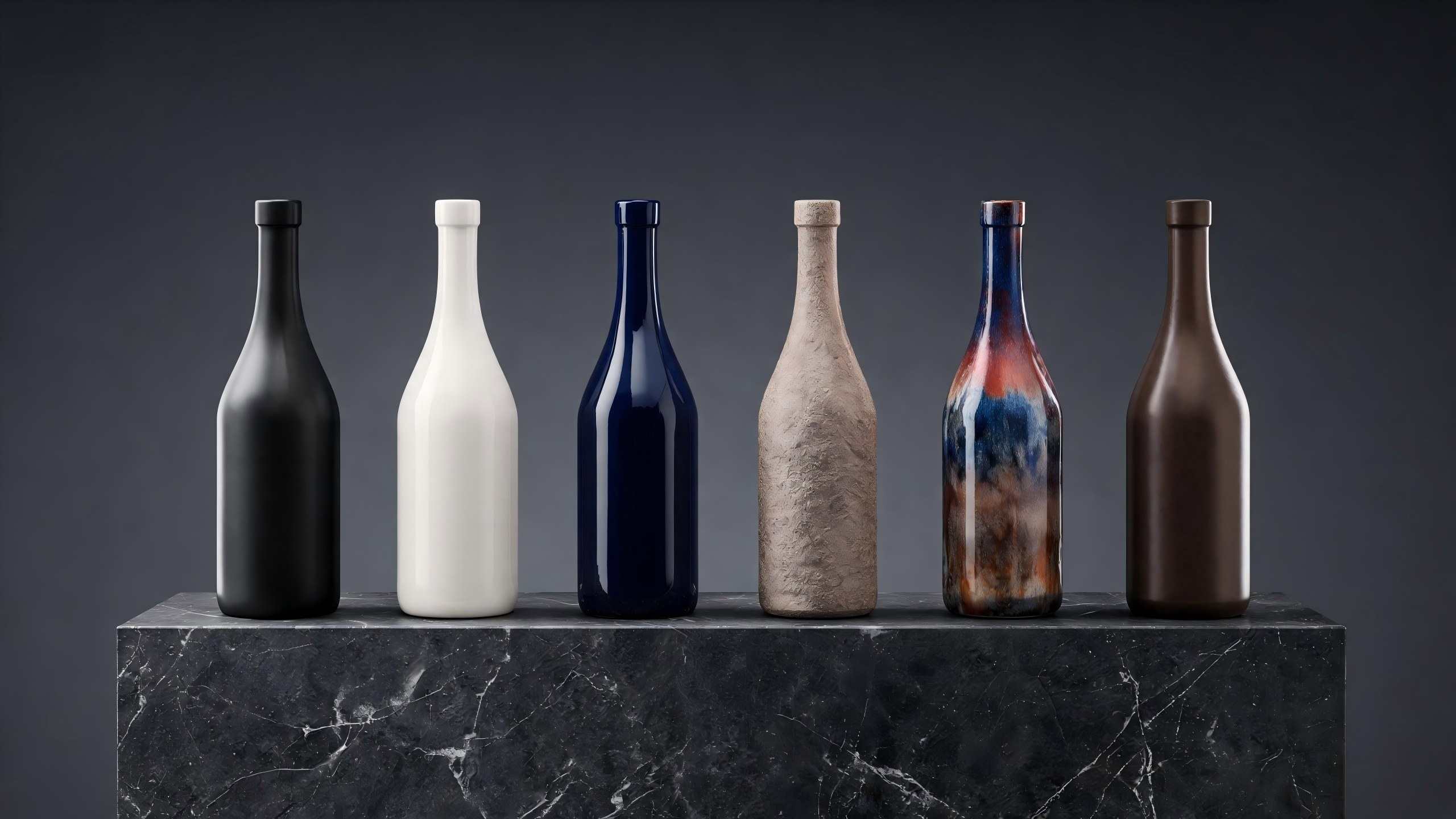
But the decision to move from glass to ceramic is about more than just looking different. As a manufacturer, I've seen firsthand that this is a strategic business decision. It's about creating a powerful physical connection with the consumer before the bottle is even opened. The world's most discerning brands aren't just buying a container; they are investing in an experience. Let's break down why these top-tier brands are making this strategic switch and what it really means for their product.
Why Do Top Whiskey, Tequila & Liquor Brands Switch to Ceramic Bottles?
You have perfected your spirit, but its standard glass bottle feels generic. This undermines its premium quality and confuses consumers, weakening your brand's luxury position.
Top brands switch to ceramic to create a distinct shelf identity and a tactile connection with consumers. The weight, texture, and custom shapes of ceramic bottles elevate the unboxing experience, making the product feel more like a gift or a piece of art, justifying its premium cost.
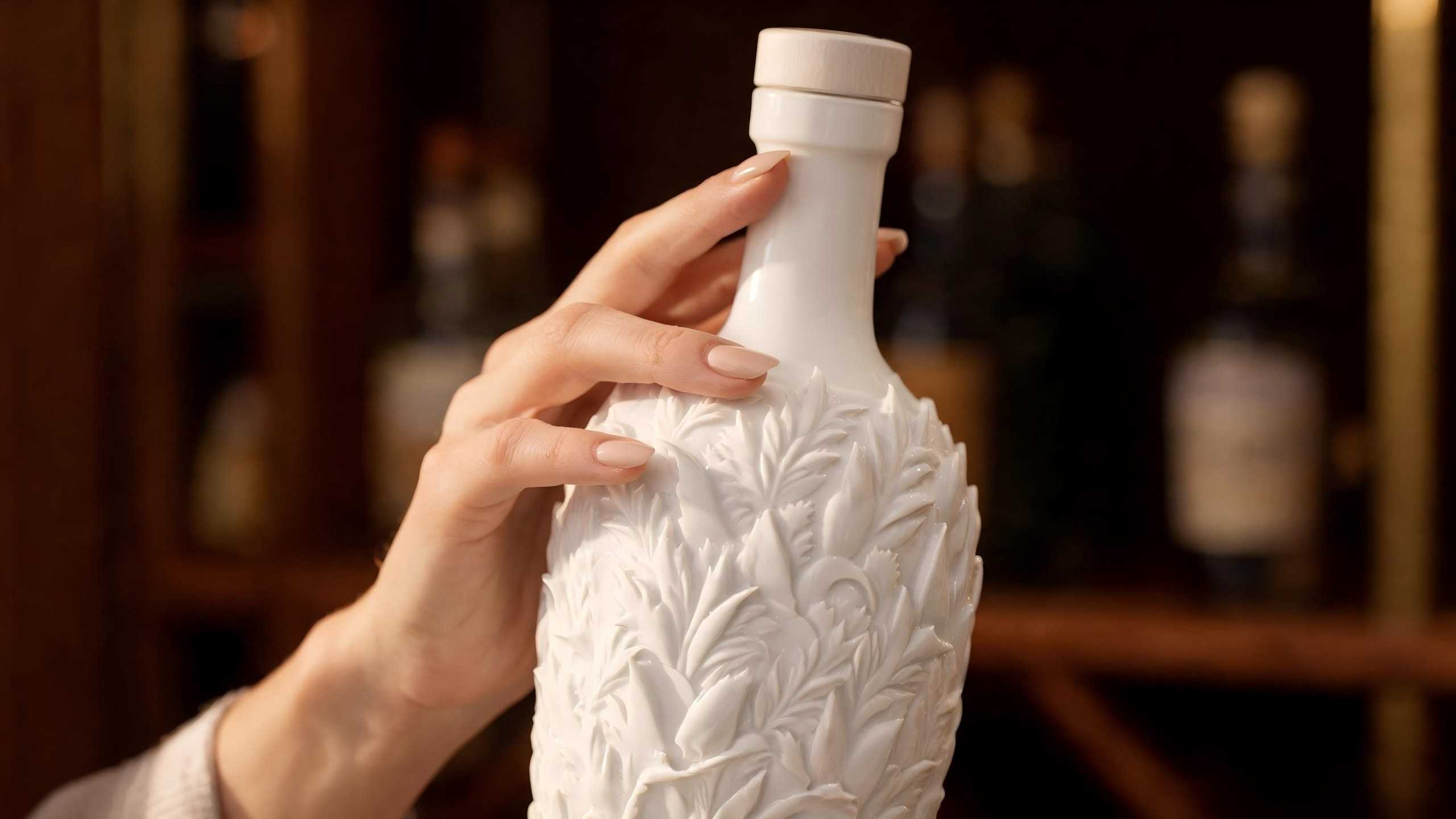
When a brand decides to use ceramic, they are making a conscious choice to prioritize sensory experience. It's a move away from the purely visual and into the world of touch and feel. A glass bottle can be beautiful, but a ceramic bottle has presence. We see this decision as a strategic upgrade to the entire brand proposition.
The Sensory Advantage
The first thing a customer notices when they pick up a ceramic bottle is the heft. This weight subconsciously communicates quality and substance. Then comes the texture. Whether it's a smooth, cool matte finish or an intricate reactive glaze, the surface tells a story of craftsmanship. This tactile engagement is something glass simply cannot replicate. It makes the bottle an object to be held, explored, and admired long after the contents are gone.
The Power of Opacity
Opacity creates a sense of mystery and prestige. It protects the precious liquid inside from light and forces the brand's story onto the bottle's exterior. The bottle becomes a blank canvas for sculptural art, intricate decoration, and rich storytelling, transforming it from mere packaging into a collectible centerpiece.
| Feature | Standard Glass Bottle | Bespoke Ceramic Bottle |
|---|---|---|
| Tactile Experience | Smooth, uniform, predictable | Varied, textured, weighty |
| Design Flexibility | Limited to mold blowing | Sculptural, artistic forms |
| Perceived Value | Standard, commodity | Bespoke, craft, luxury |
| Storytelling | Relies heavily on the label | The entire bottle is the story |
Is Switching to Ceramic Packaging a Compliance and Safety Risk?
You love the idea of a ceramic bottle, but you worry about food safety, heavy metals, and global compliance. Sourcing non-compliant packaging could lead to rejected shipments and brand damage.
Switching to ceramic is not a risk when you work with a certified supplier. Reputable manufacturers adhere to global standards like FSSC 22000, FDA, and CA Prop 65, ensuring bottles are lead-free, cadmium-free, and completely food-safe. These certifications are non-negotiable for premium brands.
As a Sourcing Director or Brand Manager, your primary concern is risk. I understand that completely. The question of safety and compliance is the most important one you can ask. The truth is, the risk isn't in the ceramic material itself; it's in the quality and integrity of the manufacturer you choose. A cheap, uncertified factory is a huge gamble. A certified, transparent partner is an asset.
The Myth of "Risky" Ceramic
High-quality ceramic, fired at over 1300°C, is an inert, stable, and perfectly safe material for storing spirits. The issues of heavy metal leaching come from low-quality, unregulated glazes. This is why we, and any other serious manufacturer, use only lead-free and cadmium-free materials and conduct rigorous third-party testing to prove it.
The Non-Negotiable Compliance Checklist
For global brands, compliance is not optional. Certifications are the language of trust. When we work with partners, we provide a full suite of documentation, from FSSC 22000 for food safety management to SMETA audits for ethical sourcing. This isn't just paperwork; it's your assurance that every bottle meets the world's most stringent standards.
| Potential Risk | How We Mitigate It |
|---|---|
| Heavy Metal Leaching | Use of certified lead-free & cadmium-free glazes; strict testing to FDA & CA Prop 65 standards. |
| Alcohol Evaporation/Leakage | High-density porcelain fired at 1300°C+; 100% vacuum testing for a perfect airtight seal. |
| Inconsistent Quality | ISO 9001 certified quality management system; strict QC at every stage from mold to packing. |
| Ethical Sourcing Concerns | Successful completion of SMETA (Sedex Members Ethical Trade Audit), ensuring ethical practices. |
How Do You Ensure a Custom Ceramic Bottle Design is Actually Producible?
You have a stunning bottle design on paper, but you are not sure if it can be manufactured consistently at scale. Production issues can cause delays, budget overruns, and frustration.
Ensuring producibility involves a close partnership between your design team and the manufacturer's engineers. Key steps include 3D modeling for mold feasibility, glaze testing for consistent color, and firing stability analysis to ensure the approved sample can be replicated perfectly at scale.
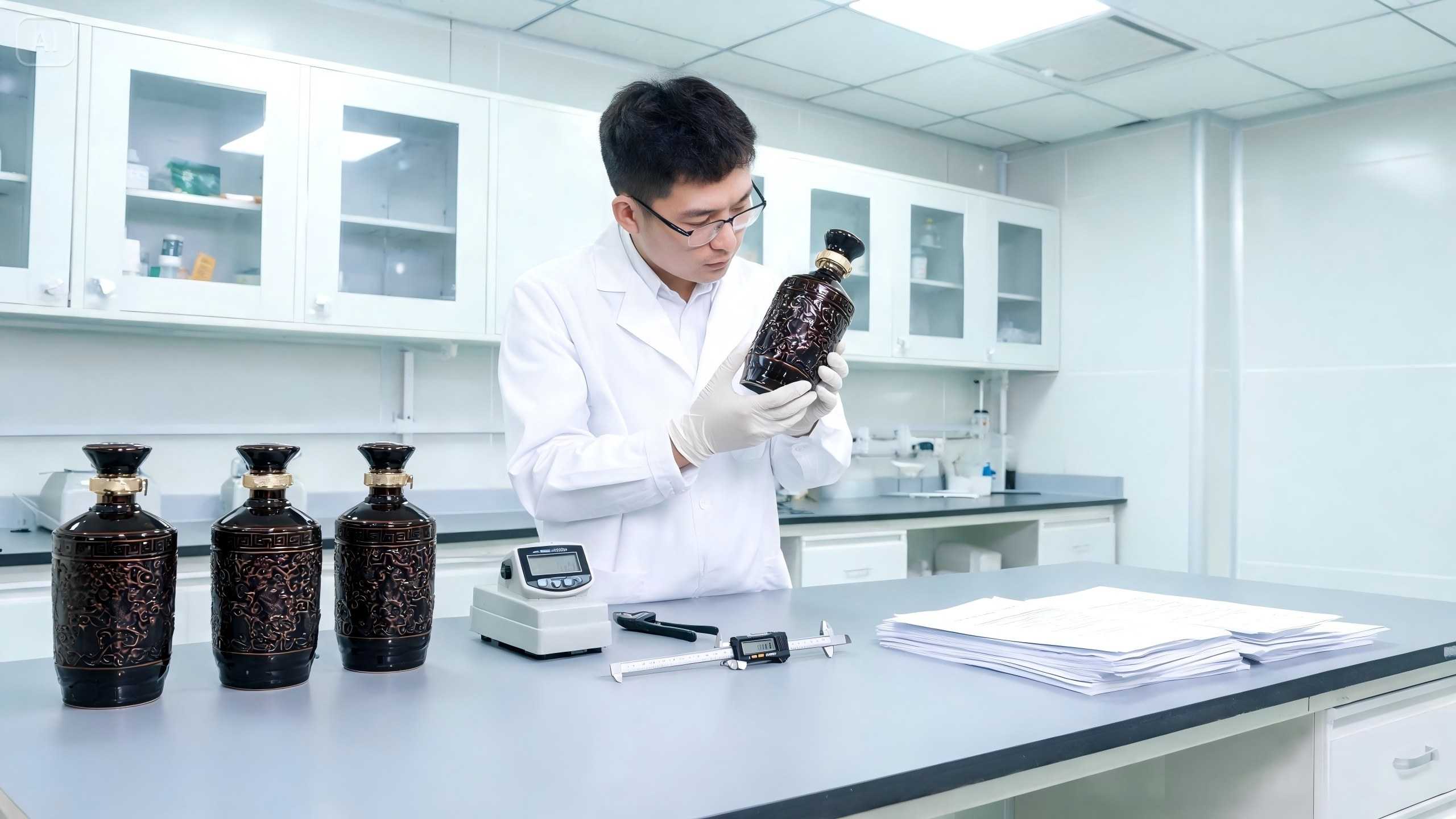
The most beautiful design in the world is useless if it can't be made. I've seen brands invest heavily in a concept only to discover it's not feasible for mass production. This is why our process always begins with engineering, not just artistry. Turning a creative vision into thousands of identical, flawless bottles requires a deep understanding of the material's behavior.
From Concept to Clay: The Engineering Phase
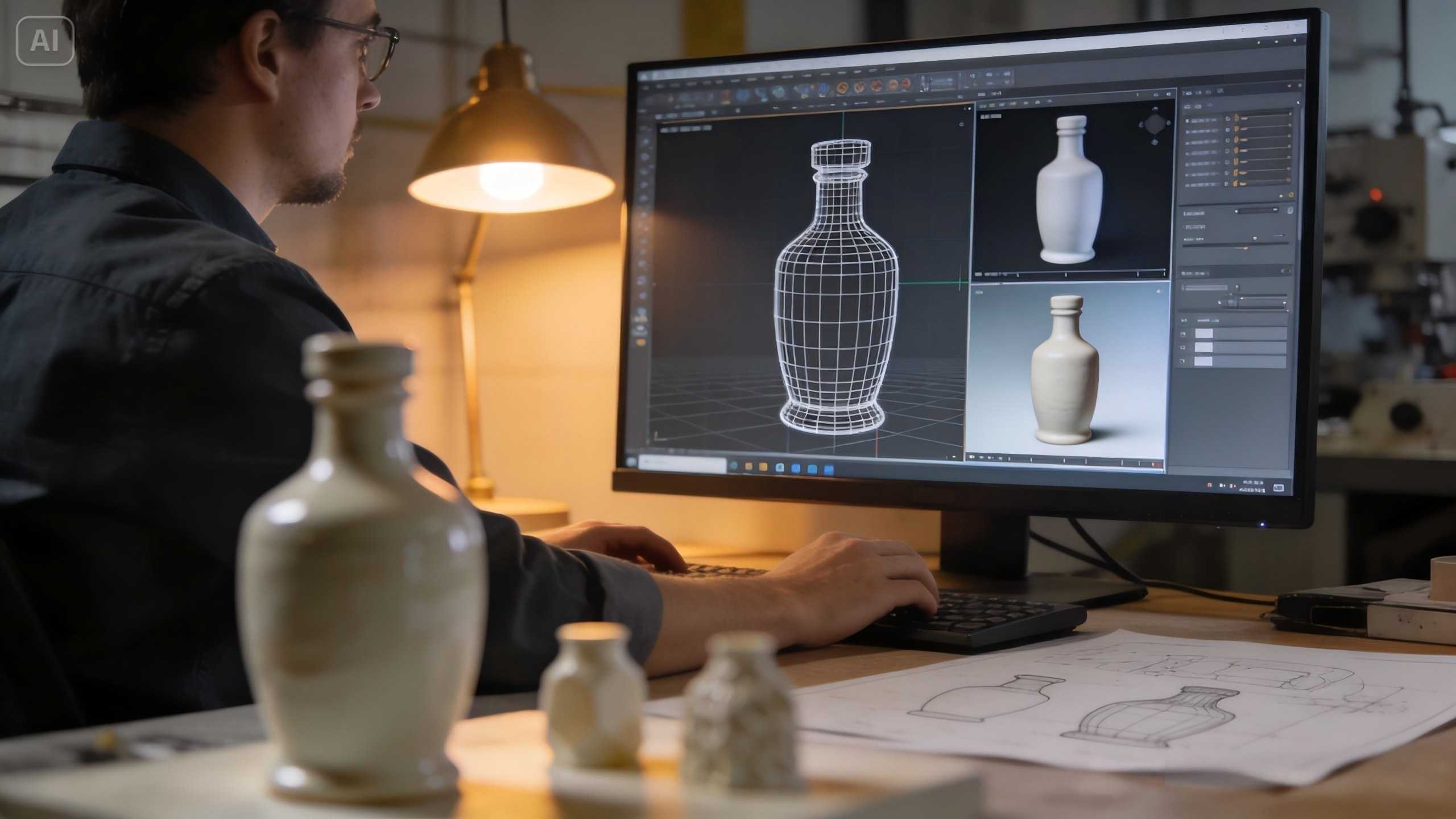
Before we make a single physical object, we build it digitally. Our engineers use 3D modeling to analyze every curve, angle, and wall thickness. This allows us to foresee potential issues with mold release, structural integrity, or weight distribution. This crucial step saves time and money, ensuring the final product is both beautiful and robust. It's how we guarantee a perfect fit for every cork and closure.
Mastering the Finish: Glazes and Decoration
The finish is where a ceramic bottle truly comes alive, but it's also the most technically challenging part. Reactive glazes, for example, create unique patterns, but controlling them requires precise chemical formulations and firing temperatures. Hand-painting, 24K gold gilding, and screen printing all have their own specific requirements. We conduct rigorous testing to validate that the approved sample's finish can be consistently reproduced across an entire production run.
| Stage | Key Action | Why It Matters |
|---|---|---|
| 1. Concept Review | Technical feasibility assessment | Prevents designing a beautiful but unproducible bottle. |
| 2. 3D Engineering | Precision mold design & prototyping | Ensures perfect form and a guaranteed fit for closures. |
| 3. Glaze & Firing Tests | Sample approval & process validation | Guarantees color and texture consistency in mass production. |
| 4. Quality Control | 100% inspection, including vacuum testing | Delivers a zero-defect product ready for your filling line. |
Conclusion
Choosing ceramic is not about replacing glass. It's about upgrading your brand’s story, justifying its value, and creating a truly unforgettable experience for your customer.
hvflfpwwjxuvexuxsdptfpwsyffziq
zdqukhfspqxskhsjxiywxlzufijvzw